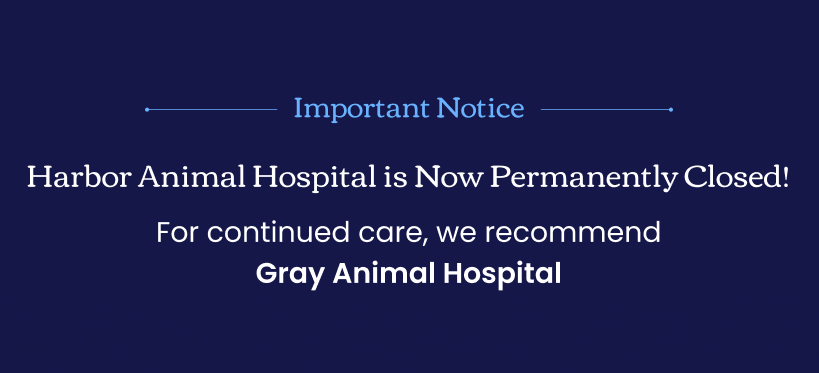


Harbor Animal Hospital is now permanently closed. For continued care, we recommend Gray Animal Hospital.


Keeping Pets Healthy With Preventative Veterinary Care
Preventative care is essential for tracking and navigating your pet’s ongoing health needs— before major issues arise. Our preventative care services include everything from wellness exams and vaccination schedules to parasite testing, weight management, and more.



Examinations
Pets have much shorter lifespans than humans. This means a lot can happen in six months, including serious medical concerns. Routine, nose-to-tail physical exams allow us to monitor health trends and take necessary steps to maintain or improve your pet’s overall wellness.
Wellness exams at Harbor Animal Hospital are comprehensive. One of our doctors will check the physical condition of your pet’s eyes, ears, nose, oral cavity, skin, coat, nails, and paws. We’ll also listen to the heart and lungs, feel the abdominal region, joints, muscles, and lymph nodes, and record body weight. Expect to also discuss vaccinations, bloodwork, parasite testing and prevention, and dental care with one of our veterinarians during your pet’s visit.
Semi-annual wellness exams are strongly recommended for all pets under our care. This twice-a-year recommendation is especially important for puppies, kittens, and senior pets, since they are more prone to infections and age-related health concerns.
Comprehensive care is a hallmark of the services we provide. For this reason, bloodwork is strongly encouraged during wellness visits. This will provide our clinical team with a complete picture of your pet’s health, inside and out.
Vaccinations
Pets come in contact with life-threatening conditions in their day-to-day lives. This is an inevitable truth, which is why up-to-date vaccinations are a key part of preventative care. For the benefit of your pet, our team will provide timely reminders so your pet has continual protection without any interruptions.
Core vaccines are recommended for all pets, whereas non-core vaccines are lifestyle-dependent and based on your pet’s species, breed, age, and lifestyle. A vaccine schedule will be created to meet your pet’s unique health needs, so your pet will never be over-vaccinated.
Core Vaccines
- Canine: DHPP, Rabies*
- Feline: FVRCP, Rabies*
Non-Core Vaccines
- Canine: Lyme, Leptospirosis, Bordetella, Canine Influenza
- Feline: FeLV
*Rabies is required by Illinois State Law


Parasite Testing & Prevention
Fleas, ticks, heartworms, and intestinal parasites are more than pests, they are a threat to your pet’s health. Prevention is as simple as annual fecal tests and year-round parasite control.
Preventative products vary, so it’s important to choose the right product for your pet’s needs. We’ll help you choose a pill, treat, or topical treatment that will effectively prevent parasites in your pet. Certain parasites can infect people too, which means it’s in the best interest of your entire family to keep your pet continuously protected.

- External parasites that bite the skin
- Cause skin irritation, allergic reactions, dermatitis, tapeworms, and Bartonella
- In serious cases, flea infestation can lead to anemia and death
- Timely treatment can be addressed by medication or adjustments to diet and lifestyle
- Tip: Check your pet’s skin and coat during daily grooming
Microchipping
Microchips add an additional layer of security should your pet ever be lost. This form of permanent pet identification is recommended for all pets, even indoor pets. Accidents happen. It’s best to be prepared.
Insertion is a fast and painless process. A microchip is as small as a grain of rice, and easily inserted between the shoulder blades in a similar fashion as a routine vaccination. If your lost pet is found and taken to a veterinary hospital or animal shelter, their unique microchip will be scanned for your contact information.
Make note to update your pet’s registered microchip if you ever change your home address or phone number. For complete identification protection, we recommend collars and ID tags, too.
Nutrition & Weight Management
As a pet owner, you have complete control over your pet’s food and portion control. A nutritious diet and daily exercise will keep your pet active and at an ideal body weight, as well as heighten quality of life and life expectancy.
Knowing what’s best for your pet nutritionally isn’t always easy. We’re here to help with:
- Everyday health and wellness advice
- Portion control recommendations
- Solutions for pets living with food allergies and chronic conditions
- Weight-loss advice
With pet obesity on the rise, diet and exercise are paramount to your pet’s wellness care. Ideally, a healthy lifestyle begins when a pet is a puppy or kitten. But, it’s never too soon or too late to get your pet on track if they are overweight, obese, or experiencing lifestyle-related conditions due to inadequate diet and exercise.
Nutrient-dense diets and regular physical activity prevents, or aids in the treatment of diabetes, obesity, arthritis and joint pain, thyroid disorders, food allergies, inflammatory bowel disease, cancer, heart disease, and more.
Behavior Counseling
Is your pet exhibiting undesirable behavior at home? If so, this may be your pet’s way of telling you something isn’t quite right. First, we’ll rule out any potential underlying health concerns.
Consider the following medical-related behavioral issues:
- Litterbox incontinence may be the result of a UTI, bladder stones, or kidney disease
- Destructiveness or excessive barking may be the result of anxiety
If your pet’s behavior is not medically related, we will offer training tips and advice. In some cases, we may recommend a professional pet trainer to effectively resolve the behavioral issue.