


Harbor Animal Hospital is now permanently closed. For continued care, we recommend Gray Animal Hospital.

Halloween Night Survival Guide for Your Furry Friend
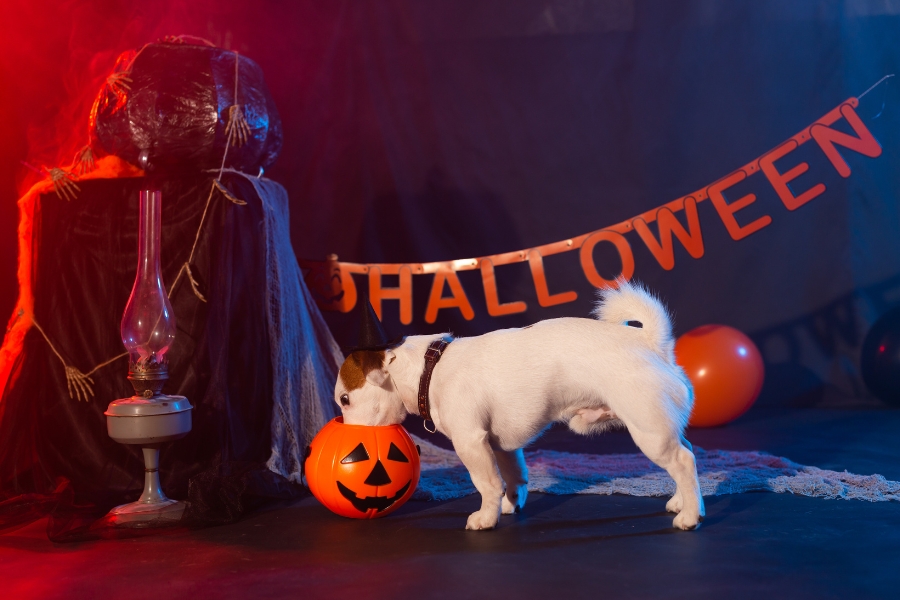
Halloween is a thrilling time for humans, but it can be stressful for pets. The flashing lights, doorbell rings, loud noises, and unfamiliar costumes can overwhelm your furry companions. To ensure your pet stays safe and calm during the festivities, it’s important to prepare in advance. This Halloween night survival guide provides actionable steps to protect your pet while letting you enjoy the holiday worry-free.
1. Create a Safe Space
First and foremost, prepare a safe space for your pet. Loud knocks, doorbells, and costume-clad strangers can trigger anxiety in animals. Designate a quiet room with familiar bedding, toys, and soothing music. For cats and small animals, an enclosed area like a crate or a room with a door they can hide behind works best. Additionally, you can add calming pheromone sprays or diffusers to help reduce stress levels.
2. Keep Candy and Chocolate Out of Reach
Next, consider the dangers lurking in Halloween treats. Chocolate, xylitol, raisins, and other sweets are toxic to pets. Even a small piece can lead to severe health issues. Make sure all candy is stored in high cabinets or sealed containers. Furthermore, educate children and visitors not to share treats with pets. By taking this precaution, you drastically reduce the risk of accidental poisoning.
3. Adjust Your Pet’s Routine
Pets thrive on routine. Halloween night can disrupt normal feeding and walking schedules. Therefore, plan ahead by feeding pets earlier and taking them for a walk before trick-or-treaters arrive. This allows them to relieve themselves in a calm environment and reduces the likelihood of them reacting fearfully to strange visitors. Consistency in routine can prevent unnecessary anxiety and help maintain normal behavior.
4. Use Reflective Gear for Outdoor Pets
If you have dogs or outdoor cats, Halloween means extra caution at night. Visibility is key to preventing accidents. Equip your pets with reflective collars, leashes, or vests. Additionally, consider walking dogs on shorter leashes to maintain better control around crowds or excited children. Safety lights or glow sticks attached to collars can also improve visibility for cars and pedestrians.
5. Costume Considerations
Dressing pets in costumes can be fun, but comfort and safety should come first. Avoid costumes with small detachable parts that pets could swallow. Ensure costumes do not restrict movement, vision, breathing, or hearing. Introduce costumes gradually before Halloween night. Let your pet wear the costume for short periods and reward them with treats to create positive associations. Never force your pet to wear something that makes them anxious.
6. Manage Door Traffic
The constant flow of trick-or-treaters can be overwhelming. Consider restricting access to your main entrance to prevent pets from escaping. Baby gates or closed doors work well. For especially nervous pets, keeping them in their designated safe space during peak trick-or-treat hours can reduce stress. Moreover, use this opportunity to monitor any signs of anxiety, such as pacing, whining, or hiding, and respond appropriately.
7. Reduce Noise and Light Stress
Halloween decorations often include flashing lights and eerie sounds, which may unsettle pets. Minimize stress by dimming indoor lights and closing curtains near front entrances. You can also play calming music or white noise to mask sudden sounds like knocking or bells. For sensitive animals, providing a cozy hideaway can offer a refuge from overstimulation.
8. Emergency Preparation
Despite all precautions, accidents can happen. Make sure you have emergency numbers handy, including local veterinarians and pet poison hotlines. Know the nearest 24-hour veterinary clinic in case of sudden illness or injury. Keep a pet first-aid kit accessible with items like gauze, antiseptic wipes, and bandages. Being prepared in advance ensures a quicker response if an unexpected incident occurs.
Halloween doesn’t have to be a stressful night for your pets. By creating safe spaces, controlling noise and traffic, monitoring outdoor activities, and ensuring treats are out of reach, you can significantly reduce potential dangers. Additionally, costumes, reflective gear, and adjusted routines can help your furry friends enjoy the night safely. If you notice any unusual behavior or signs of distress, always contact your veterinarian for professional guidance. A little preparation goes a long way in keeping your pets safe and happy during this spooky season.
FAQs
Q1. Can I give my pet Halloween candy?
Ans. No, most Halloween candy contains chocolate, xylitol, or other harmful ingredients. Stick to pet-safe treats specifically designed for animals.
Q2. How can I calm my pet during Halloween?
Ans. Provide a quiet, safe space, use calming pheromones, play soft music, and maintain their normal routine. Avoid forcing them into stressful situations.
Q3. Are costumes safe for pets?
Ans. Costumes can be safe if they fit properly, don’t restrict movement, and lack small parts that could be swallowed. Gradually introduce costumes before Halloween.
Q4. What should I do if my pet escapes during trick-or-treating?
Ans. Keep a current ID tag and microchip information. Check local shelters and notify neighbors immediately. Consider using a secure leash or confined space to prevent escapes.
Q5. How can I make my pet more visible at night?
Ans. Use reflective collars, vests, or leashes. Glow sticks or LED lights can enhance visibility for both pedestrians and drivers.
Q6. When should I contact a veterinarian during Halloween?
Ans. If your pet ingests chocolate, xylitol, or toxic foods, or shows unusual behavior like vomiting, lethargy, or seizures, contact your veterinarian immediately.